I love coffee. I love coffee so much that, short of owning my own espresso machine, I try to experiment with the kinds of coffee I can make. Now, obviously I’m no expert barista, so I don’t expect other people to like how I make my coffee. My girlfriend, for example, won’t drink anything I make without watering it down with a lot of milk. I may be guilty of making my coffee too strong. C’est la vie.
But for what it’s worth, coffee has become, and will always be, an important part of my life. In order to attain the goal of caffeinirvana, I have gone to great lengths in shaping the way I enjoy my coffee. I own a manual coffee grinder, an ibrik, two different moka pots, a coffee press, and two percolators. I also have a handheld milk frother that I use for more than just milk, which I will explain in a minute.
I find it interesting, though, that the coffee I love to drink the most are both Eastern European in origin. For hot coffee, I like the ritualistic process of preparing Turkish coffee. If I’m after a cold cup, though, I go for Greek frappes. Both of these coffees are relatively easy to make, if you know how, and can be adjusted to suit your own personal taste.
Turkish coffee
Turkish coffee involves using an ibrik to make your coffee. For the uninitiated, this basically means you dump your coffee grounds into a pot of coffee, and let it boil. But it’s a lot more than just that.
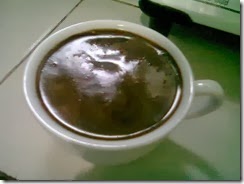 |
| As taken from my Pinterest board from 2012. |
The coffee is finely ground – which is what I needed a manual grinder for. This is crucial in creating the characteristic froth found in Turkish / Greek coffee. Pour the water in the ibrik, heat it a little bit, then put in your coffee grounds, and wait for it to get to just about boiling. Then remove the ibrik from the heat, and give it time to cool down – around half a minute or so. Then place it back on the heat, and bring it back to the boiling point. Do this a couple of times more, then carefully pour the coffee into your cups, making sure to place enough of the froth on each cup.
The tricky part is keeping the coffee from boiling over. If this happens, the flavor starts to turn bitter, and loses the flavor that you’re after. It should be said, though, that this depends on how you like your coffee; the Greeks let the ibrik boil over once, then dispenses the coffee, while the Turks follow the method I outlined above. As with everything, your move may vary depending on your taste.
Greek frappe
Perhaps the most interesting thing about the frappe is that this is a cold glass of coffee made with, of all things, instant spray-dried coffee – basically, any popular brand of instant coffee you may find on the market.
 |
| Made this afternoon. |
There are two – well, technically, three, but the second is just a variation of the first – methods of preparing frappe. The first involves a bartender’s shaker, the second a covered tumbler / glass, and the third, a handheld mixer. The first two are visually exciting, but the third is the easiest method of preparing a frappe.
Basically, you just need to agitate a little bit of water that has a teaspoon or two of instant coffee in it, until you’ve built enough froth to keep you happy – the way I do it, I usually fill up half a glass with the froth. Then you add ice cubes, more water, and / or milk.
I generally start my day with an egg sandwich and a cup of Turkish coffee, and go into the afternoons with a glass of frappe. I don’t know if this is good or not, but coffee helps me get through my day. Whenever I’m sick, I switch caffeine from coffee to tea, but I will always be a bigger fan of the liquid black gold.
What about you? What kind of coffee floats YOUR boat?
You gotta admit I'm better at making iced coffee.
ReplyDeleteYea yea yea. I know you do. Haha!
ReplyDeleteMocha and caramel. Mocha and caramel. Mocha and caramel. Okay sometimes I go for an espresso frappe, but I get bored. :P
ReplyDelete