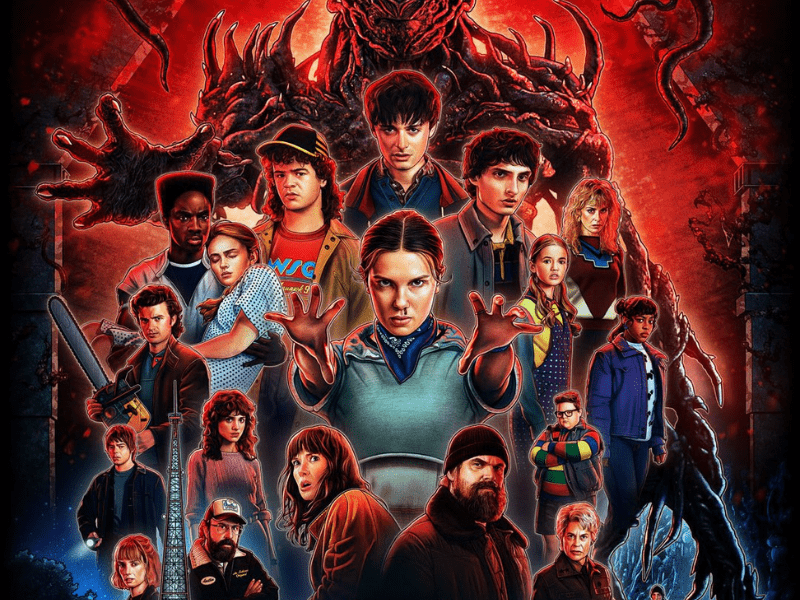
So the first day of 2026 saw the end of one of Netflix's biggest (and most well-sustained *cough Daybreak* *cough Dirk Gently*) shows. Stranger Things closed its curtains with a whopping two-hour long cinematic episode that was showed in 500 theaters across America from December 31st to January 1st, and premiered on Netflix on 9AM January 1st, at least in the Philippines.
I've read a few of the reviews, and while a lot have given it some praise, there were a few that criticized it for a lot of things. What I found funny was that a lot of the critiques were about how the story's finale left a lot of unanswered questions about the fate of some of the characters, and a lot of complaints about the logical progression of the story.
FIRST OF ALL, any questions about the logical progression of Stranger Things is, well, preposterous. The show is basically a D&D adventure come to life, shoehorned into the rural reality of a small American town, at a time period that catered to people who grew up in that epoch and their own children. It featured plenty of mental gymnastics right from the get go, and required one to suspend disbelief for more than a few seconds. Asking Stranger Things to follow real-life logic is like asking a dog to tell the vet what the problem was in plain words. It just wasn't going to happen. So long as the whole thing followed the logic within the story, where's the harm?
And then what about that other thing? The quote unquote loose ends? Like what happened to this side character? Why did the military do what they did towards the end? And focusing on these very unimportant details of the whole story just doesn't sit well from a critical point of view, because it sounds like nitpicking for issues that just aren't there. Who cares about the side characters? They're secondary for a reason, no? They support the main characters of the story throughout their trials, and celebrate their victories at the end. Not every story has to develop the backstory of each and every little character. Personally, I would have loved to know more about what happened to Brett Gelman, but that's beside the point, because he was at best the king of the side characters - but still a secondary character.
And as for the motives of the military? Maybe, just maybe, and spoilers follow, in case you haven't seen it and would like to be surprised by it, hanging on to Team Hawkins after all evidence of a secondary world was wiped out during a black op that wasn't even in the books would have been a much bigger headache than holding people who might get missed in the town hostage just because they didn't get their hands on the one person they could have used to produce the next batch of psychic anomalies.
I thoroughly enjoyed the last season of Stranger Things. And odds are, if you're a fan of the show, you will. too. Watch it. You'll love it. Peace out.
Comments
Post a Comment